
How performance data is shaping the next wave of HealthTech innovation
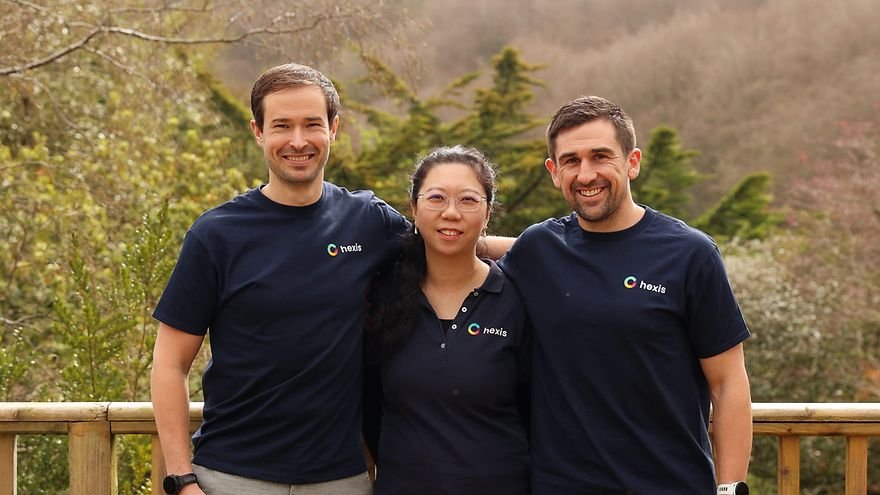
Hexis’ seed funding round highlights the growing role of wearable data, personalisation and connected platforms in health and performance innovation.
The HealthTech market is increasingly being shaped by data. Wearables, connected devices and digital platforms are changing how people understand performance, recovery, nutrition and wellbeing. As these tools become more connected, the opportunity is not simply to collect more data, but to turn it into useful, personalised guidance.
Irish company Hexis is part of that shift. Enterprise Ireland has reported that Hexis, a performance nutrition platform built on the science of carbohydrate periodisation, has closed a €1.85 million seed round led by APEX Capital, with participation from Enterprise Ireland and ScaleX.
The investment will support continued development of the company’s elite sport offering and expansion into the direct-to-consumer market. Hexis has also expanded its integration ecosystem to include Garmin, WHOOP, Apple Health, Catapult and STATSports, allowing fuel plans to adapt using athletes’ own performance data.
This is not a manufacturing story in the traditional sense. Its relevance lies in what it says about the direction of HealthTech, wearable data and personalised performance tools.
For years, wearables have helped users measure activity, sleep, recovery and training load. However, measurement on its own has limits. The next step is interpretation: helping users understand what the data means and what they should do with it.
Hexis is focused on nutrition, an area that is often highly individual and context-dependent. Athletes do not have the same fuel needs every day. Training intensity, recovery demands, competition schedules and individual physiology all influence what the body requires. A platform that can adapt recommendations based on performance data points toward a more personalised model of health and performance support.
The company’s founder, Dr David Dunne, describes nutrition as the missing layer behind training and recovery, arguing that wearables and training platforms have transformed how athletes understand performance, while nutrition has lagged behind. That observation captures a wider HealthTech challenge. Data is valuable when it connects to behaviour, decisions and outcomes.
The Hexis story also reflects a broader trend toward platform-based innovation. Increasingly, value is created not by a single product in isolation, but by the way different tools connect. Wearables, training systems, health apps and data platforms are forming ecosystems. Companies that can integrate into those ecosystems may be better placed to scale.
For SMEs, this matters because HealthTech opportunities are no longer confined to one type of product. A company may develop software, a sensor, a device, a data service, a materials solution or a specialist component. The commercial opportunity may sit in how that capability connects to a wider system.
The growth of wearable data also creates new questions. How reliable is the data? How should it be interpreted? How can it be personalised without becoming confusing? How can users trust the recommendations? How does a platform move from elite performance into broader consumer use?
These questions are relevant beyond sport. Many digital health markets face similar challenges. Whether the focus is rehabilitation, prevention, wellbeing, chronic condition support or performance, the underlying issue is how to translate data into action.
Hexis is currently rooted in performance nutrition, but the direction of travel is relevant to the wider Health and Life Sciences sector. Personalisation is becoming a stronger expectation. Users increasingly want tools that respond to their own data, context and goals. At the same time, businesses need to build products that are credible, usable and scalable.
For manufacturers and product developers, the rise of connected HealthTech can also shape future demand. More digital platforms may mean more need for sensors, wearable devices, smart textiles, embedded electronics, user-friendly hardware and reliable data capture. The digital layer still depends on physical technologies that can gather accurate information.
This creates an interesting overlap between digital health and advanced manufacturing. A personalised health platform may appear to be software-led, but its value may depend on the quality of devices, materials, sensors and systems around it.
The Irish dimension also matters. Hexis is an example of an island-of-Ireland company building into international markets, with reach across the UK, Europe, the United States and Australia. That kind of growth reflects the potential for specialised innovation companies to build from a focused proposition into wider global opportunity.
For other SMEs, the lesson is not to replicate the Hexis model directly. It is to understand the broader signal: health and performance markets are becoming more personalised, more connected and more data-driven.
The opportunity is to think carefully about where a company’s capability fits into that future. It may be in a device, a material, a manufacturing process, a digital platform, a data service or a combination of these.
As HealthTech continues to evolve, the strongest innovations are likely to be those that connect technical capability with real user value. Data alone is not enough. The value comes from making that data useful, timely and actionable.
Hexis’ latest funding round is a reminder that the next wave of HealthTech will not be defined by technology alone. It will be shaped by how well companies connect data, behaviour, product design and commercial execution.
Original article: Read the original Enterprise Ireland article. Key source details: Enterprise Ireland reports that Hexis closed a €1.85 million seed round to support continued platform development and direct-to-consumer expansion, with integrations including Garmin, WHOOP, Apple Health, Catapult and STATSports.