
From wearable health innovation to manufacturing readiness
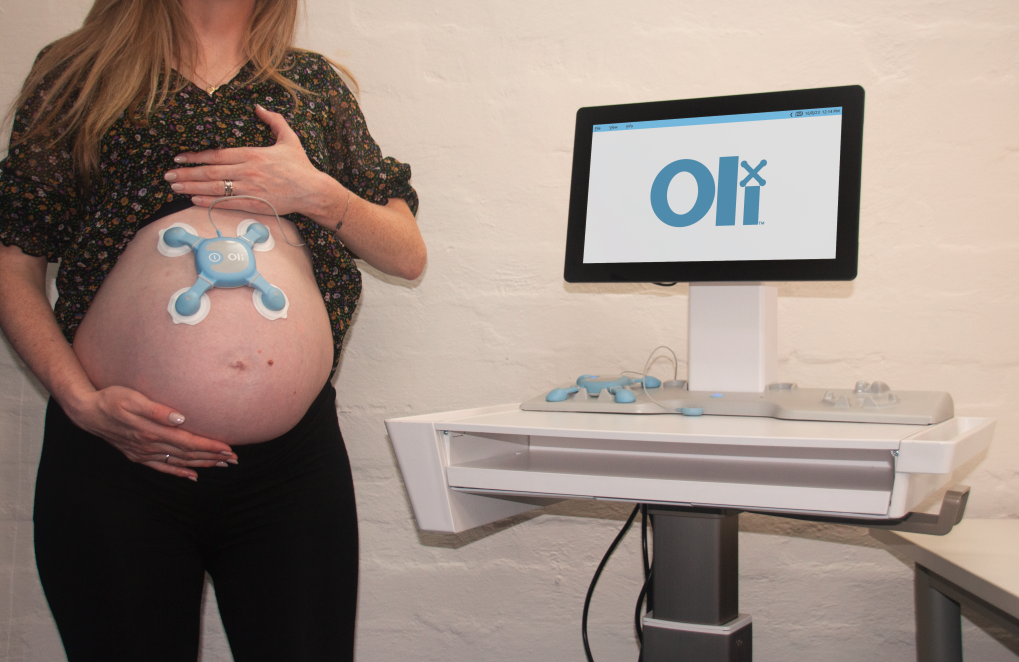
Oli’s funding to establish manufacturing capability for a maternal monitoring device highlights the practical steps needed to move connected health products toward market.
Wearable health technology is often presented as a digital story. Sensors collect data, software interprets it, and users or clinicians gain new insight. Yet behind every wearable health product is a physical device that has to be designed, manufactured, tested and used in real-world conditions.
A recent Femtech Insider article reported that Oli, a wireless wearable for maternal and fetal monitoring, has secured an additional $2 million in non-dilutive funding from the Australian Government’s Industry Growth Program. The funding will support the establishment of manufacturing capabilities in Sydney, expected to begin later this year.
The story is a useful example of the shift from concept to implementation. Oli is not simply developing a digital health idea. It is moving toward manufacturing capability, regulatory submission and commercial launch across Australia and the United States.
That transition is one of the most important stages in HealthTech innovation. A product can be technically promising, but it still has to become something that can be produced consistently, used comfortably, integrated into care pathways and trusted by patients and healthcare professionals.
Maternal and fetal monitoring is a particularly sensitive area. Technologies in this space must balance clinical need, usability, patient comfort, data reliability and safety. A wearable device may need to work over extended periods, operate in different environments and support decisions that matter for both mother and baby.
This makes manufacturing readiness critical. The physical design of the device, the materials used, the sensor configuration, the electronics, the fit, the battery performance and the production process all affect whether the product can succeed.
The Femtech Insider article notes that the new funding follows earlier support from the NSW Medical Devices Fund and sits alongside private investment. It also reports that Oli has assembled a significant funding base as it moves toward regulatory submission and commercial launch.
This combination of product development, funding, manufacturing and regulation is increasingly common across HealthTech. Companies need more than a strong idea. They need evidence, production capability, quality thinking and a route to market.
For SMEs, the Oli story highlights several useful themes.
The first is that wearables are not just software. Even where the value proposition depends on data, the quality of that data depends on the physical device. If the wearable is uncomfortable, unreliable or difficult to manufacture, the digital layer is weakened.
The second is that manufacturing capability can be a milestone in its own right. Securing funding to establish production capacity shows that a company is moving beyond experimentation and toward delivery.
The third is that regulatory and commercial pathways need to be considered early. Health products do not move into market simply because the technology works. They need to be supported by evidence, documentation, processes and partnerships.
The fourth is that connected health products often require multiple capabilities to come together. Maternal monitoring can involve sensor technology, materials, electronics, software, clinical insight, user experience and manufacturing knowledge. Few companies hold all of that expertise internally, which makes collaboration and technical support important.
The wider market signal is also worth noting. Wearable health technologies are moving into more specialised and clinically relevant areas. Early consumer wearables focused heavily on activity tracking and wellness. The next wave is increasingly concerned with richer data, specific health needs and more meaningful interventions.
As this happens, the line between digital health, medical devices and advanced manufacturing becomes less distinct. A wearable may be a digital platform, a sensor system, a medical device and a manufactured product at the same time.
For companies working in Health and Life Sciences, this creates opportunity. There is growing demand for devices that are smaller, more comfortable, more intelligent and more reliable. There is also demand for the manufacturing capability needed to produce them.
That may include flexible electronics, biocompatible materials, advanced prototyping, miniaturisation, sensor integration, quality control, usability testing and digital connectivity. Each of these areas can create openings for innovative SMEs, specialist suppliers and research-led collaborations.
Oli’s progress is a reminder that HealthTech innovation becomes more compelling when it moves toward practical implementation. The concept matters, but so does the path to making it real.
For manufacturers and technology-led SMEs, the lesson is to think about the whole product journey. The strongest opportunities may sit where clinical need, user-centred design, data and manufacturability come together.
Original article: Read the original Femtech Insider article. Key source details: Femtech Insider reports that Oli secured $2 million from the Australian Government’s Industry Growth Program to support manufacturing capability in Sydney, alongside progress toward regulatory submission and commercial launch.