
Irish MedTech is moving from clinical need to global opportunity
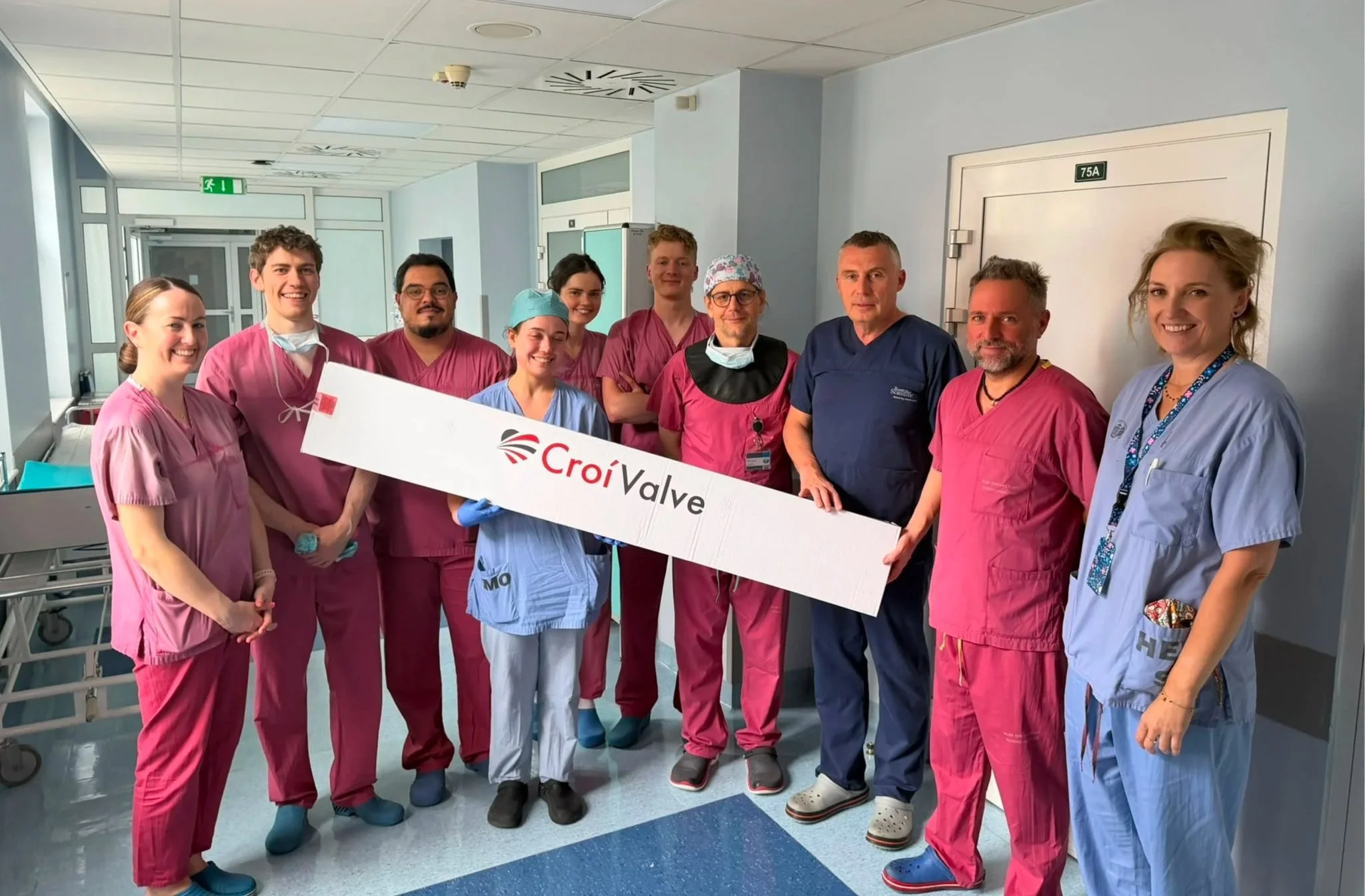
CroíValve’s latest funding round highlights the long, complex and highly focused journey behind specialist medical device innovation.
Irish MedTech company CroíValve has announced a significant expansion of its Series B financing, securing $20 million in additional equity funding alongside $7 million in European Innovation Council and Disruptive Technologies Innovation Fund grant financing.
The funding brings CroíValve’s Series B total to $36 million, or $43 million including grant support, and will be used to expand the company’s TANDEM II Study across the United States and Europe. The study is evaluating the safety and performance of CroíValve’s DUO Adapt System, a novel transcatheter device designed to treat severe or greater symptomatic tricuspid regurgitation.
This is an important story for the Irish Health and Life Sciences sector because it shows the scale of ambition, evidence and investment required to move a specialist medical device from development into clinical evaluation and international opportunity.
Tricuspid regurgitation is a serious heart condition that occurs when the tricuspid valve, located on the right side of the heart, does not close properly. When this happens, blood can flow backwards, placing additional strain on the heart and contributing to symptoms that can significantly affect quality of life.
CroíValve states that tricuspid regurgitation affects more than 4 million people across Europe and the United States. It is also associated with significant symptoms and reduced life expectancy. Despite the scale of the condition, treatment can be challenging, particularly for patients who may not be suitable candidates for invasive surgery or who present with complex anatomy.
The company’s DUO System has been developed as a transcatheter heart valve designed to work with the patient’s native tricuspid valve. Rather than replacing the valve entirely, the system works in tandem with the existing anatomy to help restore valve function. CroíValve says the approach is designed to avoid contact with critical structures in the right heart, which could otherwise lead to complications.
This kind of innovation is technically demanding. Structural heart devices must respond to clinical need, patient variation, anatomical complexity, device performance and procedural usability. The design challenge is not simply to create a device that works in principle, but to create one that can be delivered, positioned and assessed in real clinical settings.
The DUO Adapt System introduces what CroíValve describes as adaptive coaptation. In practical terms, this means the device is designed to adapt to the individual shape of the leak, helping to fill larger and more complex gaps in the valve. The company says early clinical use has shown the ability to treat very large leaks, up to 35mm, with significant reduction in tricuspid regurgitation.
That focus on adaptability is important. Medical device innovation increasingly has to deal with patient variation, not just standardised use cases. A technology that can respond to different anatomies or clinical presentations may be better placed to address patients who are difficult to treat using existing approaches.
The funding announcement also reflects the importance of clinical evidence. The expanded TANDEM II Study will build on 15 patients already treated and will include additional sites in both the US and Europe. For any investigational medical device, clinical study design, regulatory engagement and evidence generation are central to progress.
This is where MedTech innovation becomes particularly complex. It is not enough to have a promising technology. Companies must also show safety, performance, procedural practicality and clinical value. They must build confidence with clinicians, regulators, investors and potential partners.
The role of blended funding is also notable. CroíValve’s financing includes private investment from new and existing investors, alongside European and Irish grant support. That mix reflects the reality of deep technology and medical device development. Progress often requires patient capital, public innovation support and specialist investors who understand the timelines and risks involved.
BGF and the European Innovation Council joined the financing round, with participation from existing investors including the MedTech Syndicate. The MedTech Syndicate is an Irish-based investor group focused on medical devices, hardware and diagnostic technologies, and has supported CroíValve since 2018.
This combination of capital, clinical ambition and specialist expertise is one of the reasons Ireland continues to be recognised as a strong MedTech environment. The country has a deep base of medical device manufacturing, engineering capability, clinical networks, multinational presence and an active innovation ecosystem.
CroíValve is a useful example of what can emerge from that environment. The company has research, development and operations based in Ireland, with clinical and regulatory activity based in the United States. That structure reflects how Irish Health and Life Sciences companies can build from local capability while engaging with major international markets.
For growing companies, the story also highlights the importance of moving carefully through stages. Early technical development, prototype refinement, clinical engagement, regulatory planning, funding, trial expansion and commercial preparation all need to connect. Each stage creates new evidence, new risk and new requirements.
In structural heart innovation, the stakes are especially high. Devices must be designed for clinical impact, but they must also be manufacturable, deliverable and consistent. Materials, device geometry, catheter delivery, imaging requirements, procedural workflow and anatomical fit all influence whether a concept can progress.
The CroíValve announcement is therefore more than a funding story. It is a reminder that medical device innovation is a long and disciplined process, shaped by clinical need, technical development, evidence generation and international collaboration.
It also shows the importance of Ireland’s role in high-value Health and Life Sciences innovation. Companies such as CroíValve demonstrate how specialist medical technologies can be developed from an Irish base while targeting global clinical challenges.
For SMEs and innovation-led companies, the broader message is clear. The strongest opportunities often sit where a real clinical problem, a focused technical solution and a credible development pathway come together. Innovation in Health and Life Sciences is rarely simple, but when these elements align, the potential impact can be significant.
CroíValve’s expanded Series B financing gives the company additional resources to progress its DUO Adapt System through an enlarged clinical study. It also provides another example of Irish MedTech innovation operating at the intersection of engineering, clinical need, investment and global market opportunity.