
How NeuroBell is bringing AI-led innovation into neonatal care
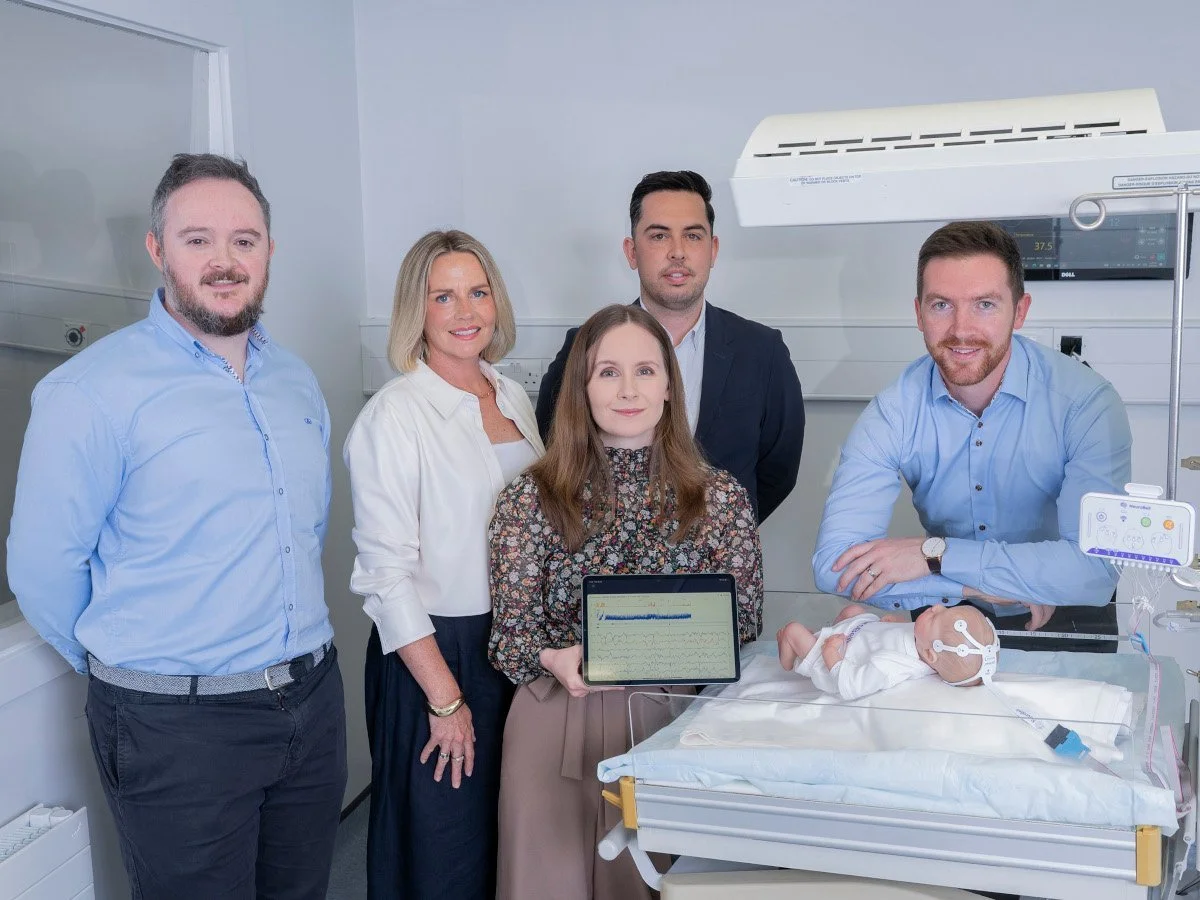
Cork MedTech company NeuroBell’s €5.5m funding round highlights the growing role of AI, device innovation and patient monitoring in supporting specialist neonatal care.
Neonatal care is one of the most sensitive and demanding areas of healthcare. Newborn babies, particularly those who are premature, critically ill or at risk of neurological complications, often need close monitoring and rapid clinical insight. In this environment, better information can make a meaningful difference.
Cork MedTech company NeuroBell is working in this space with Luna, an AI-enabled neonatal monitoring technology designed to support the early detection and interpretation of brain activity in newborn babies. The company has reportedly secured €5.5m in funding to support the development and progression of the technology.
The story is a strong example of how Irish HealthTech innovation is moving into highly specialised clinical areas. It also shows how medical device development is increasingly being shaped by the combination of hardware, software, artificial intelligence and real-world clinical need.
In neonatal care, neurological monitoring can be difficult. Babies in neonatal intensive care may be vulnerable, small and clinically complex. Traditional monitoring approaches can require specialist equipment, trained interpretation and access to expertise that may not always be available at the point it is needed. This can create pressure for clinical teams who need timely information to support decision-making.
Technologies such as Luna point toward a different model, where monitoring can become more accessible, more responsive and more closely aligned with the realities of neonatal care. The value is not simply in collecting data. The real value is in helping clinicians interpret that data in a way that supports earlier insight and more confident decisions.
This distinction matters. Healthcare systems are already full of information. Clinicians do not need more noise. They need tools that can capture meaningful signals, present them clearly and fit into existing clinical workflows. In neonatal care, where time, sensitivity and usability are critical, that balance is especially important.
NeuroBell’s focus on AI-led neonatal monitoring reflects a wider shift across Health and Life Sciences innovation. Artificial intelligence is moving beyond broad claims and into more specific clinical applications, where it can help interpret complex data, identify patterns and support specialist assessment.
However, AI in healthcare is only useful when it is grounded in the clinical environment. A system must be technically capable, but it must also be safe, usable, explainable and trusted. It needs to work for the healthcare professionals who will use it, and it needs to be appropriate for the patients it is designed to support.
That is particularly true in neonatal care. Any technology used with newborn babies must be designed with sensitivity to the clinical setting, the fragility of the patient group and the practical pressures facing care teams. A strong innovation in this area must combine clinical insight, engineering, data science, usability and regulatory awareness.
This is why NeuroBell’s story is more than a funding announcement. It reflects the type of HealthTech development that is likely to become increasingly important: focused, clinically informed and built around a clearly defined problem.
Funding is an important part of that journey. For MedTech and HealthTech companies, moving from a promising technology to a clinically adopted product can require significant investment. Companies need to develop the product, test and validate the technology, build evidence, engage with clinicians, plan for regulation, prepare for manufacturing and develop a commercial route to market.
Each of these stages carries risk. A product may perform well technically, but still need refinement before it fits into clinical practice. A device may collect useful data, but the interpretation layer needs to support decision-making. A company may have strong early evidence, but still need the funding and partnerships required to progress toward wider adoption.
The €5.5m funding reported for NeuroBell suggests confidence in both the company and the clinical importance of the problem it is addressing. It also highlights the growing strength of Ireland’s MedTech and HealthTech ecosystem, particularly in areas where digital capability and medical device innovation come together.
Ireland has long been recognised for medical device manufacturing and Health and Life Sciences activity. What is increasingly visible now is the growth of companies developing more connected, intelligent and data-led healthcare technologies. These companies are not only making devices. They are building systems that combine sensing, monitoring, analytics and clinical usability.
That creates new opportunities, but also new challenges. Connected medical technologies need to be reliable as physical products and credible as digital tools. They must generate useful data, but they must also be designed for safe use, regulatory approval and manufacturing consistency. This is where the boundaries between MedTech, HealthTech, digital health and advanced manufacturing begin to overlap.
For companies developing technologies in this space, product development is not just about the device itself. It is about the full pathway from clinical need to adoption. That pathway includes design, prototyping, testing, validation, regulatory planning, production, data handling and market access.
NeuroBell’s Luna technology sits within that wider direction of travel. It points to a future where healthcare monitoring becomes more intelligent, more specialised and more capable of supporting earlier intervention. In neonatal care, that potential is particularly important because the patients are among the most vulnerable in the healthcare system.
The story also shows the importance of focused innovation. Rather than trying to solve a broad healthcare problem, NeuroBell is addressing a specific clinical need where specialist insight matters. That kind of focus can be powerful. It allows a company to build around a clear user group, a defined healthcare challenge and a product with a meaningful purpose.
For the wider Health and Life Sciences sector, the message is clear. Some of the strongest innovation opportunities will come from technologies that combine deep clinical understanding with practical product development. AI can play an important role, but only when it is connected to real-world needs, high-quality data and trusted clinical workflows.
NeuroBell’s progress is a reminder that Irish innovation is not limited to broad digital health platforms or traditional medical device manufacturing. It is increasingly visible in specialist, high-value areas where technology can support better care for specific patient groups.
As neonatal care continues to evolve, tools that can support earlier neurological insight could become an important part of the future clinical landscape. The challenge will be to ensure these technologies are not only innovative, but also usable, reliable, validated and ready for adoption.
NeuroBell’s funding round is therefore a useful signal of where MedTech and HealthTech are moving: toward connected devices, intelligent monitoring, clinical decision support and technologies built around the needs of patients and clinicians.
Original article