
IMR Annual Report highlights measurable value from manufacturing innovation
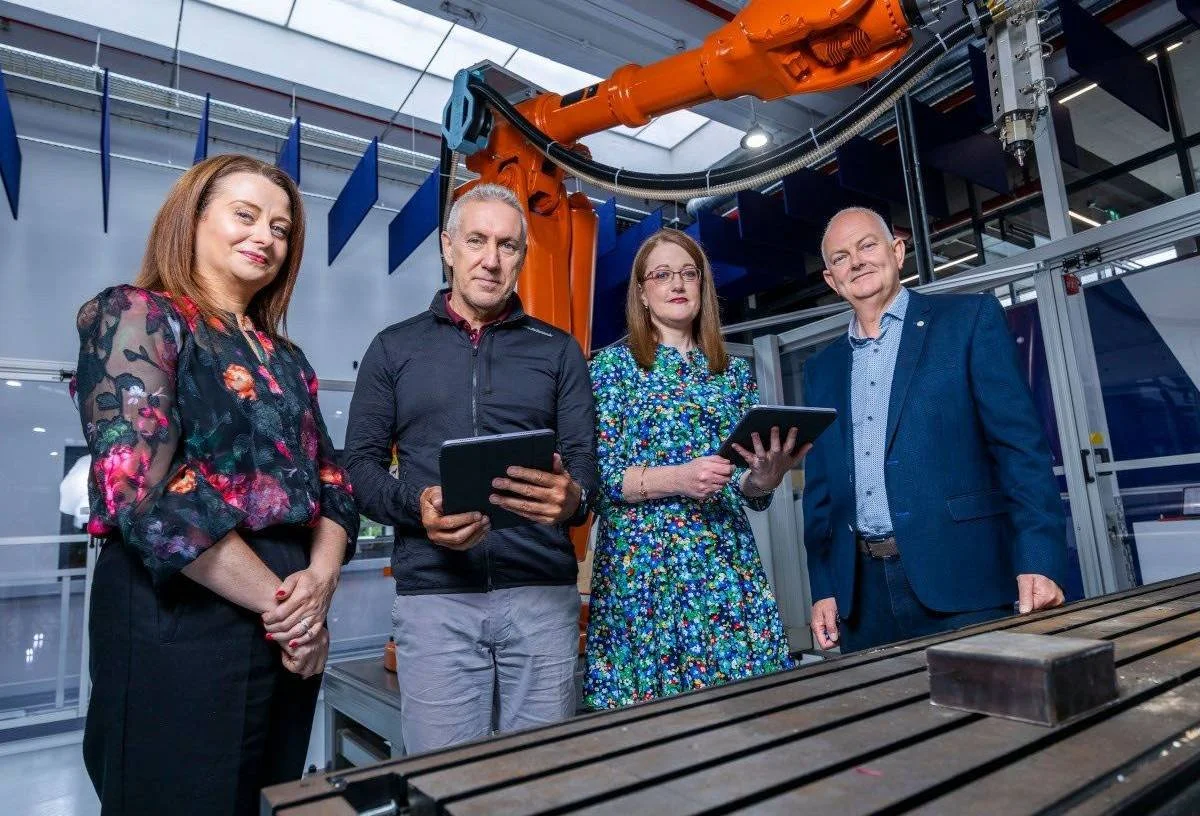
Irish Manufacturing Research’s 2025 Annual Report points to a clear shift in Irish manufacturing, with companies moving from technology exploration toward practical implementation, measurable outcomes and long-term capability.
Irish Manufacturing Research has published its 2025 Annual Report, highlighting the growing importance of practical innovation support for manufacturers across Ireland.
The report, covered by Silicon Republic, points to a clear shift in industry. Manufacturers are no longer asking only what new technologies can do. Increasingly, they are asking how those technologies can be made to work inside real businesses, with measurable value for productivity, resilience, sustainability and competitiveness.
According to IMR, the organisation supported 679 organisations through 704 engagements across every county in Ireland during 2025. Across 31 client impact statements, companies identified an estimated €18 million in projected economic value over five years. This included projected income growth and anticipated cost savings, alongside wider benefits linked to emissions reduction, water savings, skills development and jobs created or safeguarded.
For Irish manufacturing, this is an important signal. Innovation is often discussed in terms of emerging technologies, but impact is created when those technologies are connected to real operational needs. That means understanding the business problem, testing the right solution, reducing risk and supporting companies as they move from proof-of-concept into implementation.
IMR’s work is focused on helping manufacturers make that transition. Its activity spans areas including digitisation, robotics and automation, design for manufacturing and sustainable manufacturing. These are all areas where companies are under pressure to improve performance while also responding to rising expectations around resilience, cost, sustainability and skills.
The findings are particularly relevant for SMEs. Smaller manufacturers often face the same pressures as larger firms, but with fewer internal resources and less capacity to assess, test and adopt new technologies. Access to applied expertise, demonstrators, training and implementation support can help reduce the risk of investing in unfamiliar systems or processes.
A strong theme from the report is that technology alone is not enough. Artificial intelligence, robotics, digital transformation and sustainable manufacturing all offer significant opportunities, but they depend on strong foundations. Companies need reliable data, connected systems, skilled teams and a clear understanding of where innovation will create value.
This matters for advanced manufacturing because adoption is not simply a technical decision. A company may be interested in automation, AI or digital tools, but successful implementation requires process knowledge, workforce capability, integration with existing systems and a strong business case. Without those foundations, technology can remain isolated from day-to-day operations.
The report also highlights the role of European collaboration. Through its involvement in European projects, IMR helps connect Irish manufacturers to wider expertise, emerging technologies and practical methods that can be adapted for Irish industry. This international activity is important because it allows companies in Ireland to benefit from developments taking place across the wider manufacturing ecosystem.
For the Health and Life Sciences manufacturing sector, the message is highly relevant. Medical device, diagnostics and life sciences manufacturers face many of the same pressures identified in the report: productivity, digital readiness, regulatory expectations, sustainability, energy efficiency, supply-chain resilience and skills. The challenge is not only to identify promising technologies, but to implement them in ways that are practical, compliant and commercially useful.
This is where applied manufacturing support can play an important role. Manufacturers need routes to test ideas, understand risks, access specialist expertise and make informed decisions before committing significant time or investment. When that support is grounded in real operational challenges, innovation becomes more than a concept. It becomes a route to measurable improvement.
As an NWCAM2 partner, IMR’s work is closely aligned with the programme’s focus on advanced manufacturing, sustainability and practical innovation for SMEs. The annual report reinforces the importance of helping companies move from awareness to action, particularly in areas such as digital manufacturing, robotics, process improvement and sustainable production.
The wider lesson from IMR’s 2025 Annual Report is clear. The future of manufacturing will not be shaped by technology alone. It will be shaped by the ability of companies to identify the right opportunities, test them effectively, implement them in real operations and build the internal capability to sustain progress.
For manufacturers across Ireland, that practical shift from exploration to implementation is becoming increasingly important. It is also central to building a more competitive, resilient and sustainable manufacturing base.
Original article