
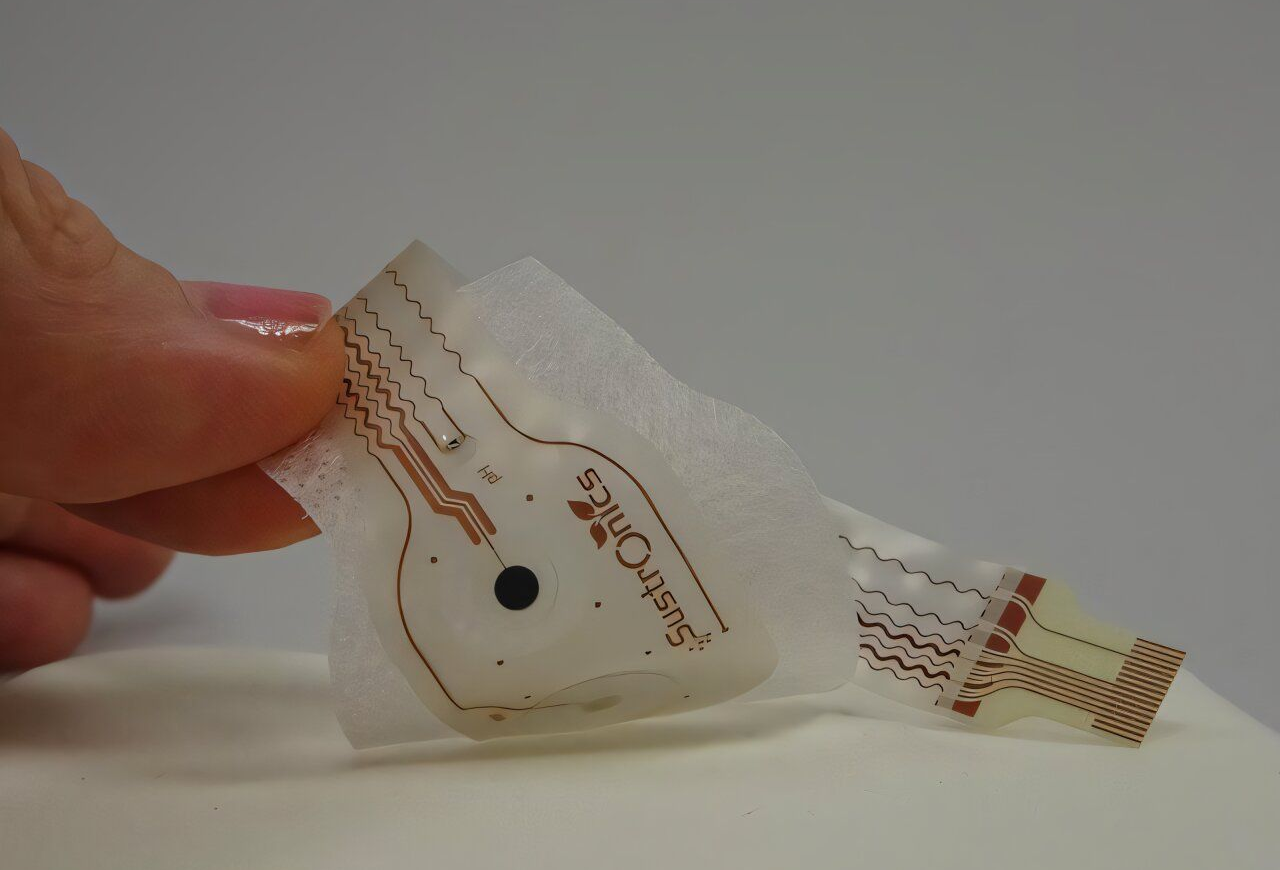
European research into sensor-based medical electronics shows how early life-cycle assessment and targeted redesign can substantially reduce a device’s environmental footprint.
Researchers at Fraunhofer IZM and partners in the European SUSTRONICS project have demonstrated how environmental assessment can be built into the development of medical and diagnostic electronics rather than treated solely as an end-of-life issue.
The project examined products across their full life cycle, from raw-material extraction and manufacturing through use and end-of-life. In a glucose-monitoring patch, the analysis identified the electrodes as the dominant environmental hotspot. Feeding that insight back into development enabled project partner Onalabs to implement an optical sensor and reduce the demonstrator’s overall carbon footprint by around 65%.
The work also shows the importance of material selection. SUSTRONICS assessed printed electronics, alternative substrates and other design choices against measures including global-warming potential, critical-material use and toxicity, allowing development teams to focus changes where they can have the greatest impact.
For MedTech SMEs, the lesson is practical: sustainability can be treated as a product and manufacturing engineering challenge. Early life-cycle assessment can identify a small number of high-impact materials, components or processes and provide evidence for redesign before those choices become embedded in later-stage production.
That approach is closely aligned with NWCAM2’s focus on advanced manufacturing and sustainability. It demonstrates how applied research, specialist measurement and industry collaboration can help companies improve both product performance and environmental outcomes as technologies progress towards manufacture.
Original article
Sustainable Medical Electronics Can Reduce Environmental Impact by Up to 65 Percent — Fraunhofer IZM