
How 3D printing could bring patient-specific contact lenses closer to the clinic
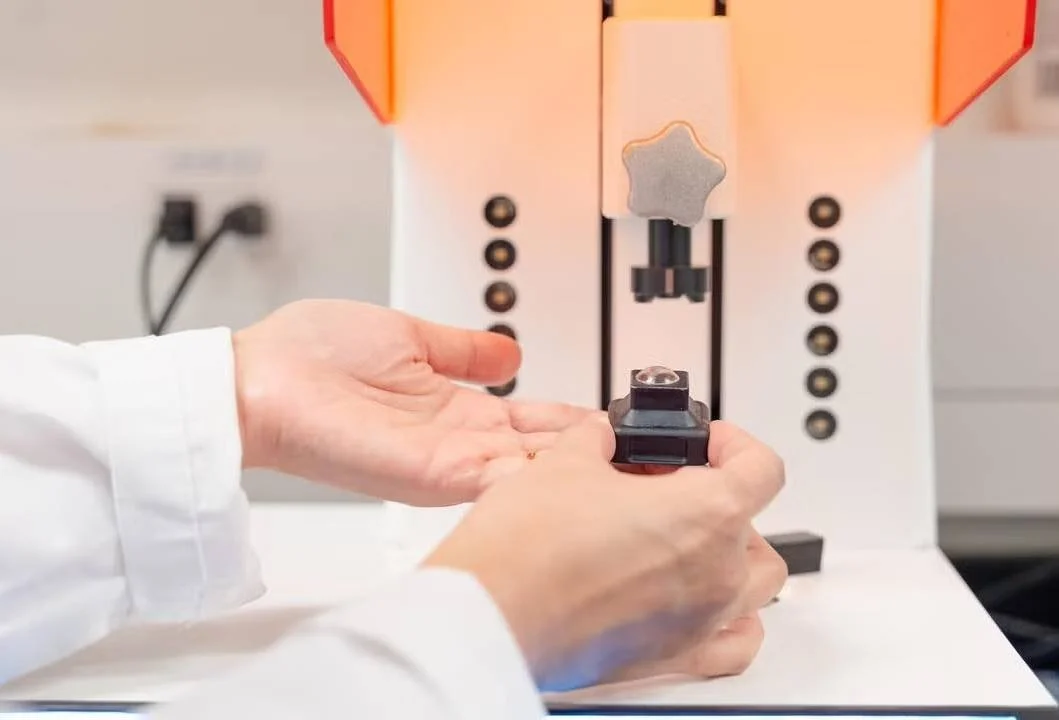
A new printable silicone developed by University of Waterloo researchers points to the potential of additive manufacturing in personalised medical device production.
Additive manufacturing is often discussed in terms of speed, flexibility and design freedom. In healthcare, its more important promise may be personalisation. The ability to produce a device around the needs of one patient, rather than relying on a standardised product range, could change how some medical devices are designed, manufactured and delivered.
A recent article from 3D Printing Industry highlights work by researchers at the University of Waterloo, who have developed a digital manufacturing system for 3D printed contact lenses. The platform combines patient-specific design software, a new printable silicone material, vat photopolymerisation and a finishing process designed to improve optical quality.
The system is reported to print custom contact lenses in roughly 20 minutes, raising the possibility that a patient could be measured, have a lens designed and receive a wearable product within a single clinic visit. While the technology is still at proof-of-concept stage, it provides a useful example of how digital manufacturing could support more personalised healthcare.
Contact lenses are already a highly specialised medical device category. Many soft lenses are produced in standard sizes and shapes, which works well for a large proportion of users. However, patients with irregular corneas, including people with conditions such as keratoconus or scarring, may require more tailored rigid lenses to achieve an effective fit and clear vision. At present, that process can involve repeated appointments, external fabrication and long fitting cycles.
The Waterloo approach is designed to compress that pathway. The software develops a lens with an inner surface shaped to match the patient’s cornea and an outer surface that provides the required vision correction. This links clinical measurement, digital design and manufacturing into a single connected workflow.
The material development is central to the story. Silicone is widely used in contact lens production because it is biocompatible, comfortable and allows oxygen to reach the eye. However, conventional silicone is not naturally suited to additive manufacturing. The Waterloo team addressed this by developing a hydrophilic silicone formulation that can be printed while retaining the optical, mechanical and comfort characteristics required for lens applications.
This is an important reminder that additive manufacturing in Health and Life Sciences is rarely just about the printer. The real innovation often sits in the combination of material science, design software, process control, finishing, testing and regulatory readiness. A device may be printed quickly, but it still has to meet clinical, safety and performance expectations.
The researchers also had to address a common challenge in layer-by-layer manufacturing. Curved printed surfaces can show fine “stair-step” ridges, which are a particular problem for optical products. In a contact lens, even small surface imperfections can affect clarity and comfort. The team developed a non-contact coating step to smooth the printed lens surface while maintaining the tailored geometry.
For medical device manufacturers, this is where the story becomes especially useful. It shows how the pathway from concept to usable product depends on solving several linked problems at once. The material must be printable. The lens must be transparent and comfortable. The surface must be smooth enough for optical performance. The production process must be reliable. The product must be capable of being tested, documented and eventually approved.
The work is not yet ready for clinical use. The article notes that the lenses have been tested in the lab and on cultured cells, but have not yet been worn on a real eye. In-vivo trials, regulatory approval and manufacturing partnerships will be needed before the technology can move toward market. That caveat is important. The story is not about a finished commercial product. It is about an emerging manufacturing route with clear potential.
That makes it particularly relevant for SMEs working in medical devices, materials or specialist manufacturing. Early-stage innovation often looks promising in technical terms, but the route to adoption depends on much more than a successful prototype. Companies need to think about repeatability, validation, quality systems, clinical evidence, user experience and the practical economics of production.
The contact lens example also points toward a wider shift in medical manufacturing: the movement of production closer to the point of need. If technologies like this can mature, some specialist devices could be designed and manufactured nearer to the patient, rather than moving through long centralised production chains. That does not remove the need for quality control or regulation. It makes those systems even more important.
For Health and Life Sciences manufacturing, the opportunity is not simply faster production. It is the ability to link data, design, materials and manufacturing into a more responsive model. Patient-specific devices, whether lenses, implants, prosthetics or other specialist products, require manufacturing systems that can manage variation without losing control.
The University of Waterloo research highlights how additive manufacturing, future materials and digital workflows can come together around a specific clinical need. It also shows the distance that still exists between proof of concept and routine healthcare use.
For SMEs, the lesson is practical. The strongest innovation opportunities may sit at the intersection of material capability, manufacturing process and unmet user need. Additive manufacturing can open up new routes, but only when it is supported by the surrounding expertise needed to make products safe, reliable and scalable.
As personalised healthcare continues to develop, stories like this show why advanced manufacturing will matter. The future of medical device production is unlikely to be defined by one technology alone. It will depend on how well companies can connect patient data, product design, material performance, production quality and clinical evidence into a complete pathway.
Original article
Read the original 3D Printing Industry article: https://3dprintingindustry.com/news/a-new-silicone-lets-3d-printers-turn-out-custom-fit-contact-lenses-253165/