
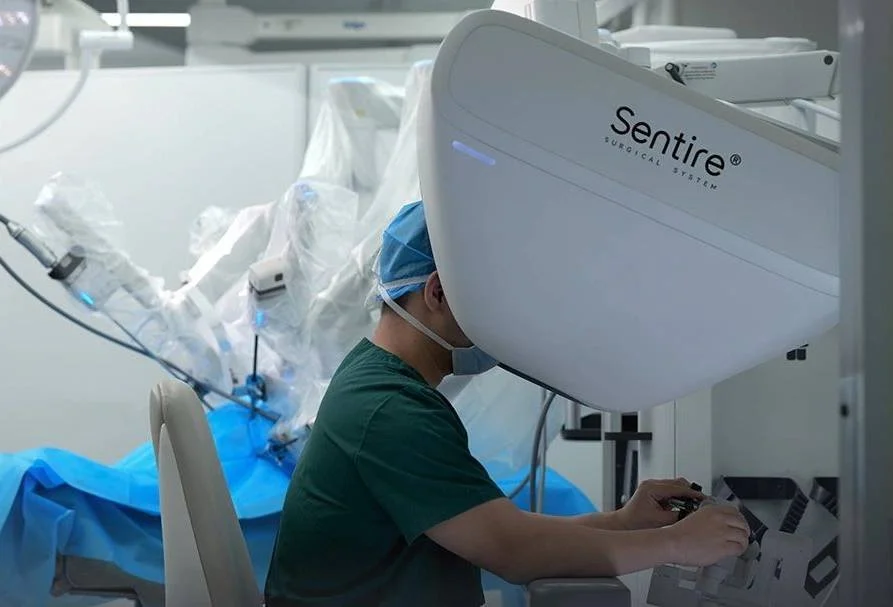
Surgeons in Galway were given the opportunity to remotely operate the Sentire Surgical System located at RCSI in Dublin, demonstrating how robotics and connectivity could reshape surgical training and access.
Ireland has demonstrated the potential of remote robotic surgery training through a nationwide telesurgery initiative linking Galway and Dublin.
The Royal College of Surgeons in Ireland (RCSI), supported by the University of Galway and Cornerstone Robotics, delivered dedicated telesurgery sessions as part of the 51st Sir Peter Freyer Surgical Symposium on 4 September 2026.
During the sessions, surgeons and surgical trainees attending the symposium in Galway were able to use a robotic console to remotely control the Sentire Surgical System located at the RCSI Robotic Surgery Training and Research Centre in Dublin.
The initiative provided participants with hands-on exposure to a robotic platform that is new to Ireland while demonstrating how high-speed connectivity and robotic surgical systems can enable specialist training to be delivered across different locations.
Telesurgery brings together several technologies that are increasingly important within modern MedTech, including precision robotics, real-time digital communications, advanced control systems, data infrastructure and software-enabled medical devices.
While the immediate focus of the Galway-to-Dublin demonstration was surgical education and training, the underlying technology points towards a wider future in which specialist expertise could potentially be accessed remotely, supporting more distributed models of clinical training and care.
The demonstration is particularly timely for Ireland’s MedTech ecosystem. Cornerstone Robotics’ Sentire system has recently attracted significant international attention following a strategic investment and distribution partnership with Medtronic, further highlighting the rapid development of robotic-assisted surgery technologies.
For NWCAM2, the story provides a strong example of the convergence between advanced engineering and healthcare. Developing robotic surgical systems requires expertise spanning precision manufacturing, mechatronics, sensing, software, validation, human-machine interaction and regulated medical-device development.
It also demonstrates how innovation is not limited to the physical device itself. The wider value of advanced medical technologies increasingly depends on how hardware, software, connectivity, data and clinical workflows are integrated into a usable and scalable system.
Ireland’s ability to host and demonstrate technologies of this kind also reinforces the strength of the wider MedTech ecosystem across the island, where clinical expertise, research capability and medical-device innovation increasingly intersect.
Original article
Royal College of Surgeons in Ireland – RCSI to host nationwide telesurgery event at Freyer 2026 meeting
https://www.rcsi.com/surgery/news-and-events/news/news-article/2026/08/rcsi-to-host-nationwide-telesurgery-event-at-freyer-2026-meeting
Supporting information
University of Galway: University of Galway to host 51st Sir Peter Freyer Surgical Symposium
https://www.universityofgalway.ie/about-us/news-and-events/news-archive/2026/september/-university-of-galway-to-host-51st-sir-peter-freyer-surgical-symposium.html
Photo Credit: Barry McGuire
Urologic Surgeon, Professor of Postgraduate Surgical Education and Academic Development RCSI