
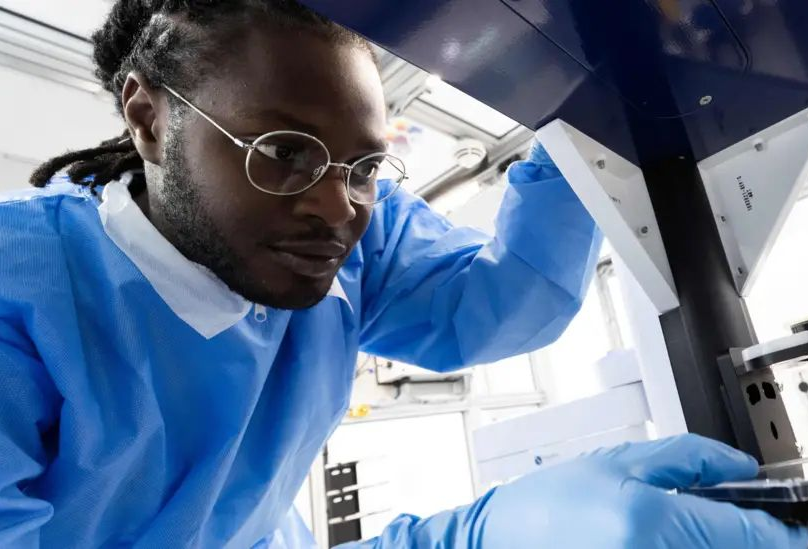
New Liverpool facility will combine laboratory automation with human tissue models to accelerate infectious disease research and reduce reliance on animal testing
A new £20 million robotic laboratory is being developed in Liverpool to accelerate the development and testing of new drugs, vaccines and diagnostic technologies.
The facility at the Liverpool School of Tropical Medicine will combine advanced laboratory automation with miniature human organs grown from donor tissue, enabling researchers to test potential treatments for infectious diseases using human-relevant biological models.
The laboratory is being developed with support from the Infection Innovation Consortium (iiCON) and is expected to be fully operational in 2027.
The approach could allow large numbers of potential treatments to be evaluated more quickly and consistently than through conventional laboratory processes. Researchers also hope that using human tissue models could generate more representative data while reducing the requirement for animal testing.
For the Health & Life Sciences sector, the development demonstrates the growing convergence between biological research and advanced technologies including robotics, automation and digitally controlled laboratory processes.
These technologies have implications beyond early-stage research. Greater automation can help improve repeatability, process control and throughput — capabilities that become increasingly important as new therapies, diagnostics and other healthcare innovations move towards validation, scale-up and manufacture.
The facility also illustrates a wider opportunity for companies developing products for the Health & Life Sciences sector: innovation increasingly depends not only on the product itself, but on the technologies and processes used to develop, test and ultimately produce it.
Through NWCAM2, SMEs can access advanced manufacturing expertise and facilities across a network of academic and research partners, helping companies explore how technologies including automation, robotics, advanced materials, additive manufacturing and digital manufacturing could support the development of new or improved products and processes.
Original article
https://www.bbc.co.uk/news/articles/cp3k4zej318o
Supporting information
Liverpool School of Tropical Medicine / Infection Innovation Consortium (iiCON)