
3D-printable hydrogel points to more adaptable wearable health sensors
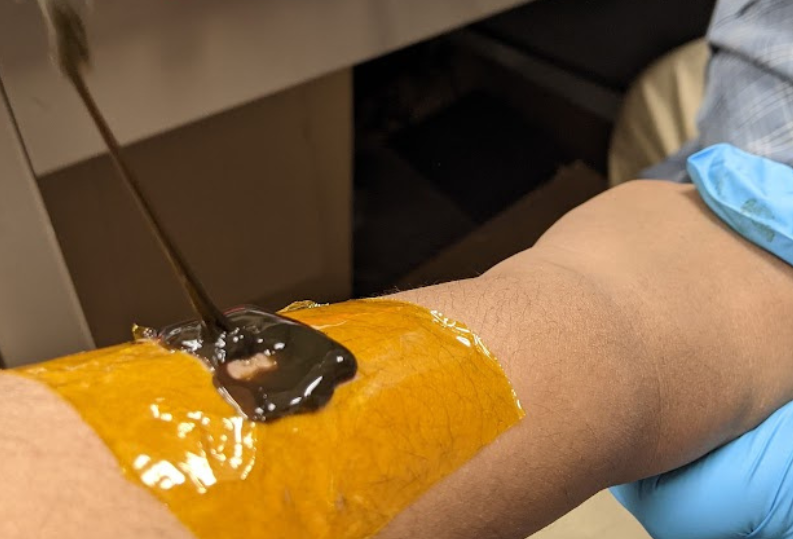
Penn State researchers have developed an ultrasoft conductive hydrogel that can be printed directly onto dry, wet, moving or hairy skin, enabling simultaneous monitoring of multiple physiological signals and pointing to new possibilities for customised wearable health devices.
Researchers led by Pennsylvania State University have developed a soft, conductive hydrogel designed for direct 3D printing onto the body, with the material able to maintain close contact across dry, wet, moving and hairy skin.
The RTLR hydrogel combines a water-rich polymer matrix with laser-induced graphene and reduced graphene oxide. By adjusting the pH of the precursor material, the researchers can control gelation time, which is important for extrusion-based printing because it determines how long the material remains workable before it sets.
Published in Science Advances, the research reports that the hydrogel is highly stretchable, breathable and adhesive, with the ability to capture several physiological signals at the same time. Proof-of-concept demonstrations included electrophysiological, electrodermal and strain sensing, with the material retaining contact in conditions where conventional skin-mounted sensors can struggle, including movement, sweat and hair.
The manufacturing relevance is significant. Rather than relying only on prefabricated electrodes with fixed geometries, the material can be printed into customised shapes at the point of use. That opens the possibility of patient-specific sensor layouts, denser multi-sensor patches and wearable systems that combine material design, additive manufacturing and digital health technologies.
For NWCAM2, the story is a useful example of how advanced materials and additive manufacturing can combine to address practical MedTech product-development challenges. It also highlights the importance of bringing materials science, manufacturing process development and clinical or user requirements together early when developing next-generation medical devices.
The technology remains at research stage and the team notes that printing resolution, long-term stability and adhesion under changing environmental conditions still require further development. Even so, it provides a strong illustration of the type of cross-disciplinary innovation that can move wearable sensing beyond standard form factors.
Original article
Penn State Materials Research Institute, Printable hydrogel enables wearable health sensors that multitask