
Point-of-Care Implant Clearance Sets a New Manufacturing Benchmark
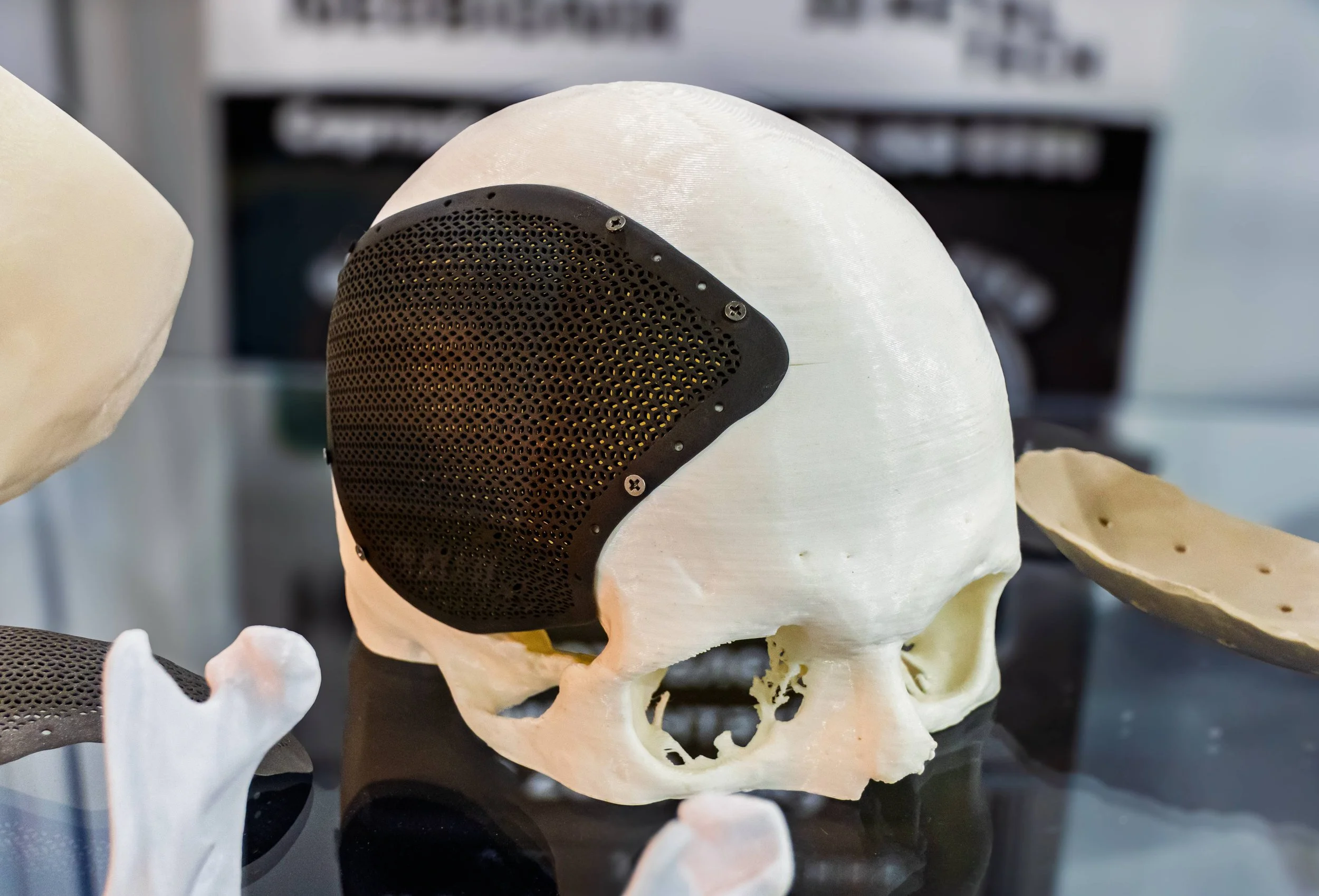
A patient-specific titanium cranial plate manufactured within a clinical institution has received FDA clearance, demonstrating the quality and regulatory infrastructure required for hospital-based production.
The US Food and Drug Administration has granted premarket clearance for a patient-specific titanium cranial plate system manufactured by the 3D Medical Applications Center at Walter Reed National Military Medical Center.
According to 3D Systems, the clearance is the first granted to a point-of-care institution for an implantable medical device. The titanium cranial plates are intended for active-duty personnel and other patients requiring reconstruction following traumatic head injuries.
The milestone reflects several years of work extending well beyond the additive manufacturing process itself. The partners developed a quality management system and addressed device design, process controls, validation, manufacturing workflows and regulatory submission requirements.
This provides a significant signal for personalised medical-device manufacturing. Producing an implant close to the patient can shorten the connection between clinical need, digital design and manufacture, but it does not reduce the need for controlled and auditable production. Point-of-care manufacturing must demonstrate the same attention to material specifications, repeatability, traceability, testing and quality evidence expected of any regulated manufacturer.
For SMEs exploring patient-specific devices, the case shows that clinical access and manufacturing technology are only part of the pathway. Progress towards adoption depends on building regulatory strategy and quality assurance into the development process from the outset.
Original article
3D Systems Enables First FDA Clearance for Implant from a Point-of-Care Institution, 3D Systems/GlobeNewswire, 28 July 2026